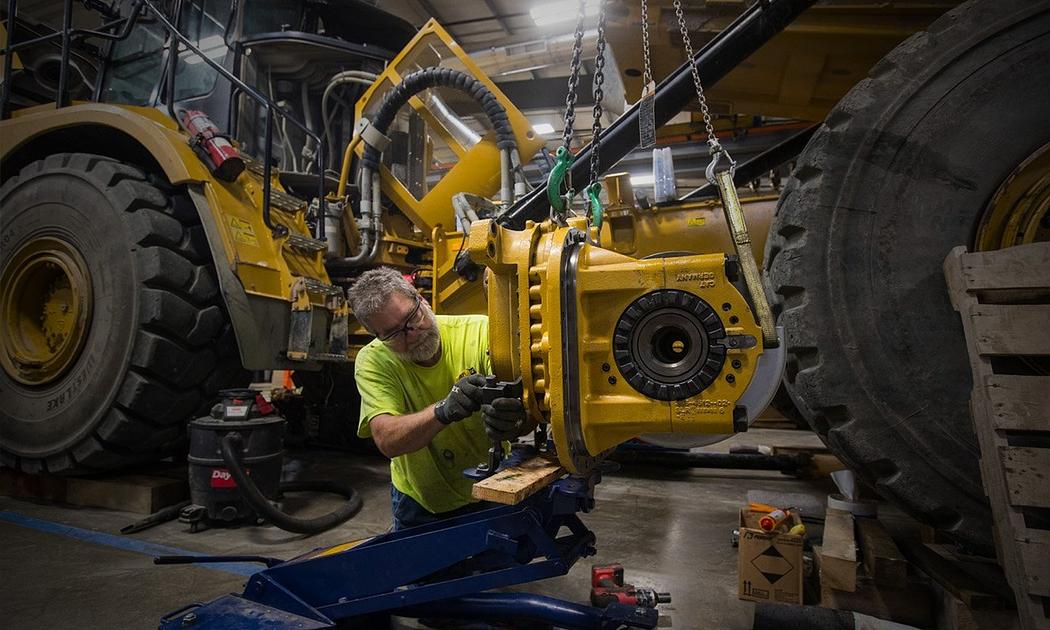
21,700 jobs a year, nationwide. Here's what that means for Michigan equipment techs.
If you work in heavy equipment in Michigan — turning wrenches at a dealer, running iron on a jobsite, or moving parts behind a counter — you've probably felt it: every shop you know is hiring. Every dealer principal is complaining about finding good techs. Every operator over 55 is talking about retirement.
This isn't anecdotal anymore. The numbers back it up.
What the BLS just told us
The Bureau of Labor Statistics published its 2024–2034 employment projections for our industry. Here's the headline data:
- Heavy vehicle and mobile equipment service technicians — projected to grow 6% by 2034. About 21,700 openings projected every year, nationwide, for the next decade. Roughly 245,600 jobs in this category today.
- Construction equipment operators — projected to grow 4%, with 46,200 openings each year through 2034. Most of those openings will be replacing workers who retire or move on.
"Faster than average for all occupations" is the BLS's official phrasing for mobile equipment techs. Translation: this is one of the few skilled-trade categories the government expects to keep growing — even as broader job growth slows from 13% (last decade) to 3.1% (next decade).
Why Michigan especially
Michigan over-indexes on this work. We have:
- One of the highest concentrations of equipment operators in the country (BLS pegged us at over 7,000 operators back in 2017, with annual growth tracking near 9%)
- An aging dealer-tech workforce — most of the master techs we know are within 10 years of retirement
- A construction pipeline driven by infrastructure repair (Michigan roads, bridges, water systems all need work), new EV plant construction, AI data center buildout, and renewable energy installations
- A manufacturing base that builds the equipment too — Caterpillar in Menominee, BOSS Snowplow in Iron Mountain, GSI in Marshall
Put it together and what you have is a state where, for the next decade, every diesel tech, equipment operator, and parts professional is going to be wanted. The leverage is shifting.
What this means if you're in the industry
If you're a tech or operator looking for a move: the market hasn't been this favorable in 20 years. Employers are competing for you. Signing bonuses, union wages, paid training programs — these aren't perks anymore, they're the table stakes to fill seats. Browse what dealers are actually offering on equipmentindustryjobs.com; the strongest packages are openly published.
If you're 18-25 and figuring out a career: this is the trade to look at. The BLS doesn't print "21,700 openings a year" lightly. AIS HETI in Richmond and MacAllister's Technician School are training pipelines that put you in a $50K-$80K+ career inside a year. No four-year degree, no student debt.
If you're an employer: the techs aren't there. They're going to keep not being there. Posting "competitive wages" without saying what they are, hiding signing bonuses behind the interview wall, or requiring three rounds of in-person interviews for a wrench-turning job — that's how you lose the candidate to the dealer down the road who said the number on the listing.
The honest read
None of this guarantees you a perfect job. Equipment work is hard, hours can be long, and the winters in Michigan don't forgive an outdoor field service tech. But the demand is real, the pay is real, and the openings are real.
If you've been thinking about a move, this is the year to make it. If you've been thinking about getting into the industry, this is the year to start.
We're tracking 240+ open Michigan equipment roles right now across 18 employers — from BOSS Snowplow welders in Iron Mountain to MacAllister union diesel techs in Novi to John Deere dealer parts pros across the state. See what's open →
Sources: BLS Occupational Outlook Handbook — Heavy Vehicle and Mobile Equipment Service Technicians, BLS — Construction Equipment Operators, BLS 2024-2034 Employment Projections.